Blue Kite
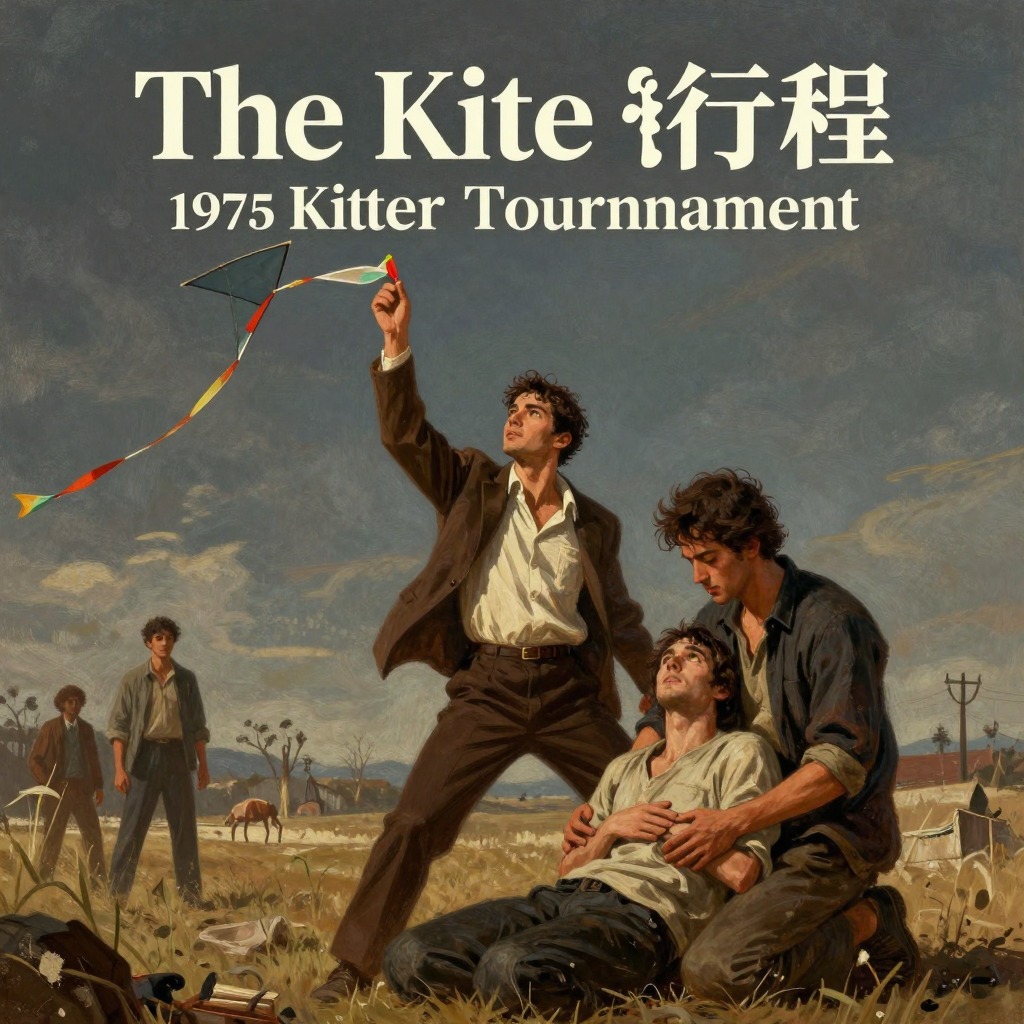
The Blue Kite is the last kite cut during the 1975 winter kite-fighting tournament in Kabul, won by Amir and run by Hassan. It becomes the central object of Amir's betrayal, as he watches Hassan get raped while retrieving it, and later the symbol of his guilt and his eventual redemption when he runs a kite for Hassan's son, Sohrab, in a San Francisco park.
Construction and Significance
The Blue Kite was a kite of the type sold by Saifo, the nearly blind shoe repairman and famous kite maker who worked out of a tiny hovel on Jadeh Maywand. The kite was made of bamboo, thin tissue paper, and glass-coated cutting line called tar, which was fed through a mixture of ground glass and glue. The kite was red with yellow borders, marked with Saifo's unmistakable signature just beneath where the central and cross spars met. The kite was the prize of the tournament, the last one flying after all others had been cut. For Amir, winning the tournament and possessing the Blue Kite was the key to winning Baba's approval, a way to finally be pardoned for killing his mother during childbirth. He imagined bringing it home to show Baba once and for all that his son was worthy, hoping for conversation and laughter over dinner instead of silence.
The Assault in the Alley
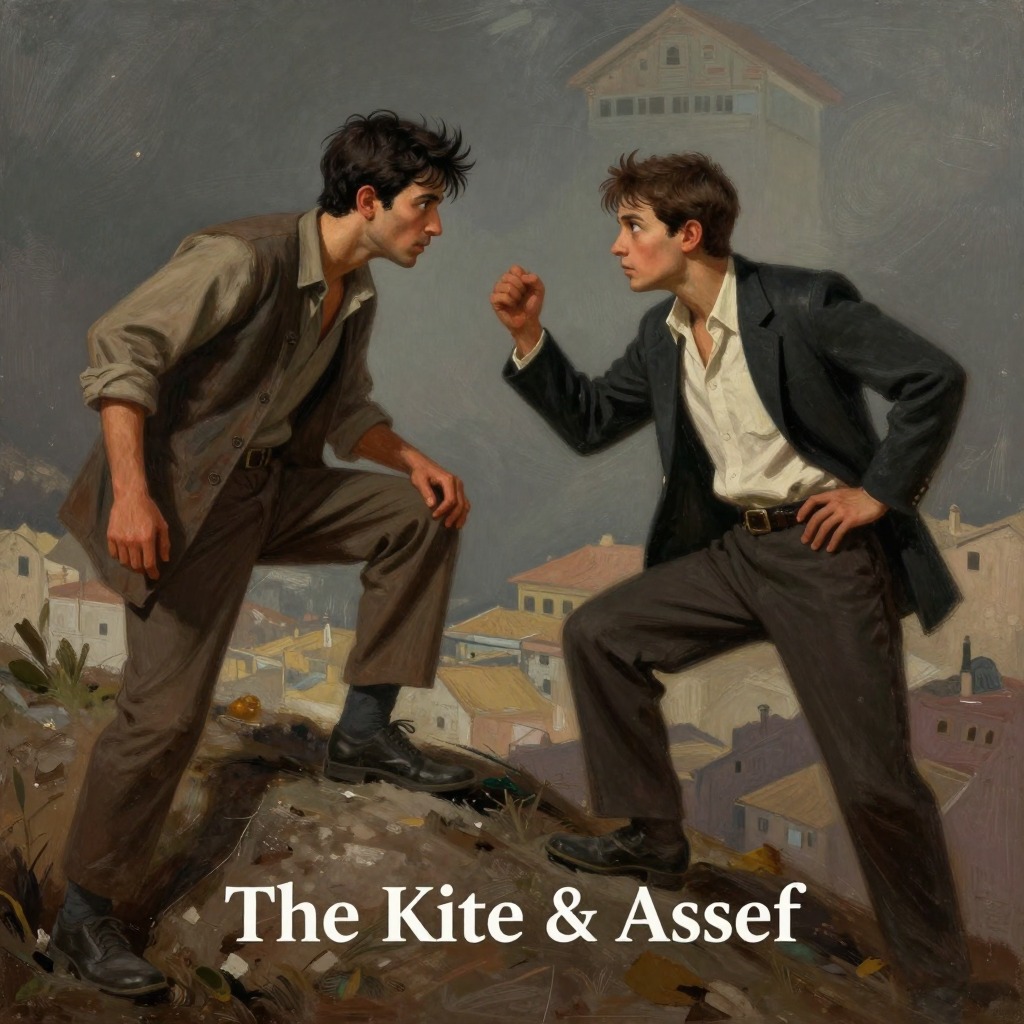
After Amir cut the Blue Kite, Hassan promised to run it for him, shouting "For you a thousand times over!" before disappearing around a corner. Hassan found the kite in a blind alley in the bazaar, but Assef and his friends Wali and Kamal cornered him there. Assef offered to let Hassan keep the kite if he handed it over, but Hassan refused, saying "Amir agha won the tournament and I ran this kite for him. I ran it fairly. This is his kite." Assef then raped Hassan while Wali and Kamal held him down. The Blue Kite rested against the wall near a rusted cast-iron stove, and Hassan's brown corduroy pants lay discarded on a heap of eroded bricks. Amir watched from the mouth of the alley but did nothing. After the assault, Hassan walked toward Amir with the Blue Kite in his hands, his chapan mud-smeared and his shirt ripped. Amir's first thought was to scan the kite for any rips. Hassan handed him the kite, and Amir took it to Baba's study, where Baba opened his arms and held him close. Amir buried his face in the warmth of his father's chest and wept.
The False Confession
Months later, Amir framed Hassan for stealing his new watch and a handful of Afghani bills, planting them under Hassan's mattress. When Baba confronted Hassan, Hassan confessed to the theft in a single word: "Yes." This was Hassan's final sacrifice for Amir, knowing that Amir had seen everything in the alley and done nothing. Baba forgave Hassan, but Ali announced they were leaving. Baba wept, pleading with them to stay, but Ali refused. The Blue Kite remained in Amir's possession, a trophy of honor that had cost Hassan everything.
The Photograph and the Letter
Years later, Rahim Khan gave Amir a Polaroid photograph of Hassan and Sohrab standing in front of the wrought-iron gates of Baba's house. In the photograph, Hassan wore a white turban and a green-striped chapan, squinting and smiling at the camera, showing a pair of missing front teeth. The little boy stood barefoot, one arm wrapped around Hassan's thigh, his shaved head resting against his father's hip. The photograph was taken the day before Rahim Khan left for Peshawar. In a letter, Hassan wrote that he had taught Sohrab to read and write, and that Sohrab's favorite part of the Shahnamah was the story of Rostam and Sohrab. The letter also described how the Taliban had banned kite fighting, and how Hassan dreamed of a day when kites would fly in the skies of Kabul again.
Redemption in San Francisco
In March 2002, at a gathering of Afghans at Lake Elizabeth Park in Fremont, Amir bought a yellow seh-parcha kite from a stand. He tested the string the way Hassan and he used to, holding it between his thumb and forefinger and pulling it until it reddened with blood. He asked Sohrab if he wanted to help fly it, but Sohrab initially refused. Amir ran with the kite, feeling the old instincts rush back, and performed the old lift-and-dive trick, cutting a green kite. Sohrab followed him, and when Amir held the string out for him, Sohrab's hand lifted from his pocket and took it. After the green kite was cut, Sohrab's mouth curled into a lopsided smile, hardly there but present. Amir asked if he wanted him to run the kite for him, and Sohrab nodded. Amir said, "For you, a thousand times over," and ran with a swarm of screaming children, a smile as wide as the Valley of Panjsher on his lips.